
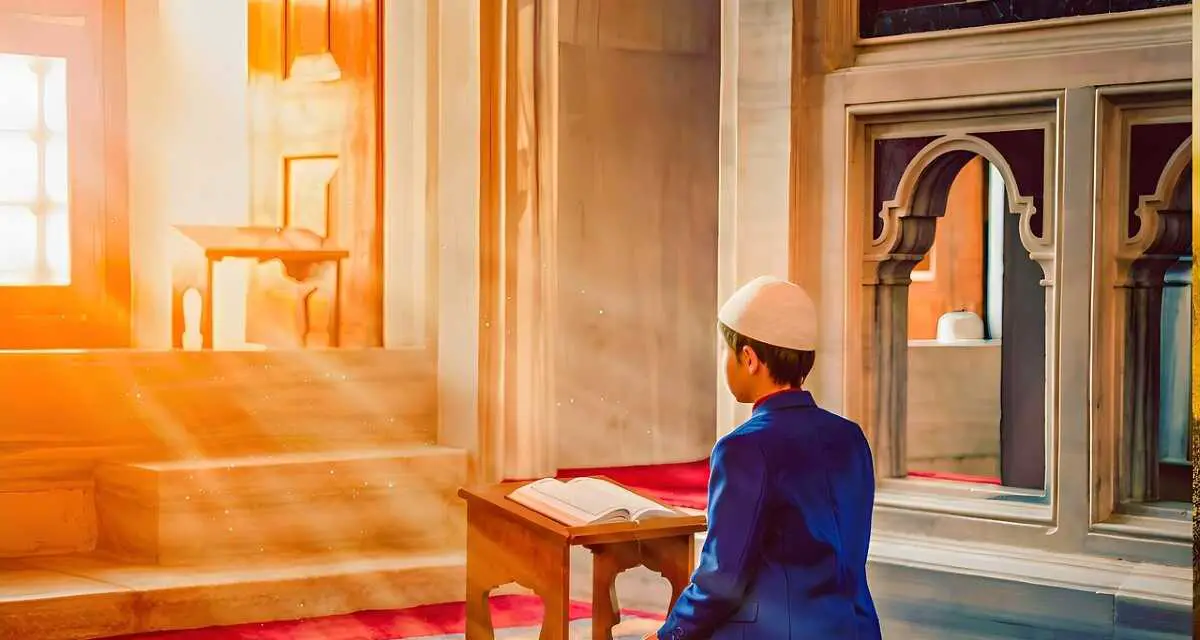
It is obligatory to offer salaat ash-shurooq (prayer following sunrise)?
Praise be to Allah
Firstly:
Salaat al-ishraaq is a two-rak‘ah prayer that is offered
after the sun has risen and become high, for those who pray Fajr in
congregation in the mosque, then sit in the place where they prayed,
remembering Allah, may He be exalted, until they pray two rak‘ahs.
Concerning its virtue, the Prophet (blessings and peace of
Allah be upon him) said: “Whoever prays Fajr in congregation, then sits
remembering Allah until the sun rises, then prays two rak‘ahs, will have a
reward like that of Hajj and ‘Umrah, complete, complete, complete.”
Narrated by at-Tirmidhi (586), from Anas ibn Maalik (may
Allah be pleased with him).
There is a difference of scholarly opinion as to the
soundness of this hadeeth. It was classed as da‘eef (weak) by some scholars
and classed as hasan (good) by others. Among those who classed it as hasan
was al-Albaani (may Allah have mercy on him) in Saheeh Sunan at-Tirmidhi.
Shaykh Ibn Baaz (may Allah have mercy on him) was asked about
it and said: This hadeeth has isnaads that are fine, thus it is regarded as
coming under the heading of hasan because of corroborating evidence. This
prayer is mustahabb after the sun has risen and reached the height of a
spear, that is approximately fifteen or twenty minutes after the sun rises.
End quote from Fataawa ash-Shaykh Ibn Baaz, 25/171
Secondly:
This prayer is mustahabb (encouraged), not obligatory, and it
comes under the heading of Duha prayer, because the time for Duha prayer
lasts from when the sun has risen high until just before the zenith (the
time of Zuhr).
With regard to Duha prayer being Sunnah and mustahabb, it was
narrated by al-Bukhaari (1178) and Muslim (721) that Abu Hurayrah (may Allah
be pleased with him) said: My beloved (blessings and peace of Allah be upon
him) advised me to do three things, which I will not forsake so long as I
live: to fast three days of each month, to pray Duha, and not to sleep until
I pray Witr.
Shaykh Ibn ‘Uthaymeen (may Allah be pleased with him) was
asked about Ishraaq and Duha prayer, and replied: The Sunnah of Ishraaq is
(the same as) the Sunnah of Duha, but if it is done early, from the time
when the sun has risen to the height of a spear, then it is Ishraaq prayer;
if it is done at the end of its time or in the middle of its time, then it
is Duha prayer. But it is (all) Duha prayer, because the scholars (may Allah
be pleased with them) said that the time of Duha prayer lasts from when the
sun has risen to the height of a spear until just before the zenith.
End quote from Liqa’ al-Baab al-Maftooh, 141/24.
This has been explained previously in the answer to question
no. 22389.


