
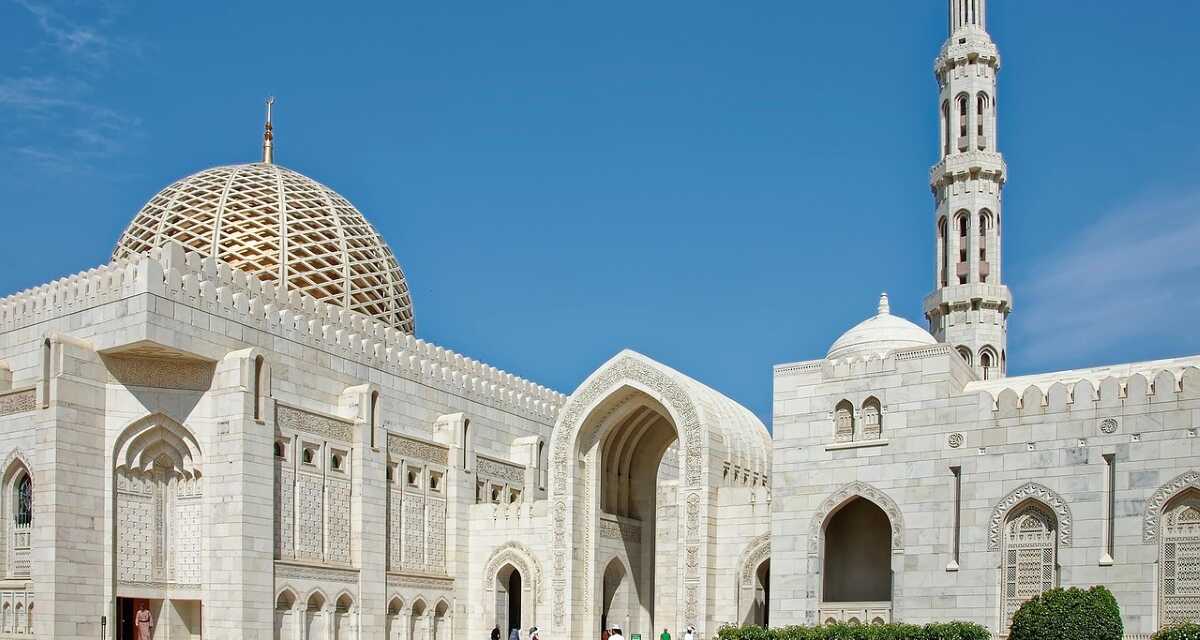
What is the ruling on non-Muslims entering the hall of the mosque, because in the mosque there is a hall that is outside of the prayer space, and this hall belongs to the mosque and there is one main entrance for both of them. This hall is equipped with chairs and tables, and can be used when needed. The non-Muslims’ use of it would be seasonal, when they have gatherings because of one of their festivals, so they could use this hall, and dishes for lunch would be prepared and served in this hall, and the income from this day would go to the mosque funds, for maintenance and so on. What is the ruling on doing this? Is this regarded as tantamount to joining them in their festival? Please note that our intention is different, because our aim is to collect money for the upkeep of the mosque, and our intention – in sha Allah – this year will be more sublime, as we want to make the most of their presence and help them get to know about Islam. Is there anything wrong with letting them use this hall, knowing that I am resident in a western country?
Praise
be to Allah.
Firstly:
If
when this hall was built, your intention was that it was not part of the
mosque, and that it was rather for celebrations or gatherings and seminars,
then it does not come under the rulings on mosques, so it is permissible for
disbelievers to enter it.
But if this hall was built on the basis that it was to be part of the mosque
and was to be used for these celebrations and for prayer when needed, then
it is part of the mosque, and it comes under the rulings on mosques.
Similarly, it comes under the rulings on mosques if you did not intend
anything in particular when building it, but it was part of the structure of
the mosque, or there was a wall enclosing it and the mosque.
The scholars of the Standing Committee for Issuing Fatwas said:
Whatever is within the wall of the mosque is part of the mosque and comes
under the same rulings as the mosque. So the yard of the mosque is part of
the mosque and the library of the mosque is part of the mosque, if each of
them is enclosed within the wall of the mosque. End quote.
Shaykh ‘Abd al-‘Azeez
ibn Baaz, Shaykh ‘Abd al-‘Azeez Aal ash-Shaykh, Shaykh ‘Abdullah ibn
Ghadyaan, Shaykh Saalih al-Fawzaan, Shaykh Bakr Abu Zayd
Fataawa al-Lajnah ad-Daa’imah,
vol. 2 (5/234)
For more information, please see the answer to question no.
103136
It
is not permissible for a disbeliever to enter the mosque unless there is a
need or an interest to be served by his entering it, such as if he enters it
to listen to a lecture, or to drink water, and the like. This has been
explained previously in the answers to questions no. 2192
and 9444.
If
the disbeliever is going to enter the mosque and commit some reprehensible
actions, such as reckless mixing between men and women, or if women who are
uncovered and adorned are going to enter, then it is not appropriate to be
hesitant about prohibiting that.
If
this hall comes under the same rulings as the mosque, then it is not
permissible for the disbelievers to enter it in order to celebrate their
festival, because there is no shar‘i purpose to be served by that.
It
is not permissible to rent it to them or to anyone else, because mosques are
not built for that purpose; rather they are built for the remembrance of
Allah and the establishment of prayer. This is a second reason to disallow
rental of the place to them.
Ibn al-Qaasim (may Allah have mercy on him) was asked: What do you think, if
a man builds a mosque and rents it out to someone who will pray there? He
said: This is not right in my opinion, because the mosques were not built to
be rented out.
Al-Mudawwanah
(3/434)
Secondly:
There is a third reason which dictates that it is not allowed for these
people to enter this hall, whether it is part of the mosque or not, which is
that they are entering it only for the purpose of celebrating their
festival, and the festivals of the polytheists are false and invalid. It is
not permissible for the Muslims to participate with them in that or to help
them in doing so, because Allah, may He be exalted, says (interpretation of
the meaning):
“Help you one another in Al‑Birr and At‑Taqwa (virtue,
righteousness and piety); but do not help one another in sin and
transgression”
[al-Maa’idah 5:2].
Al-Bayhaqi (19334) narrated from ‘Umar ibn al-Khattaab (may Allah be pleased
with him) that he said: “Avoid the enemies of Allah during their
festivals.”
Some of the early generation interpreted the words of Allah, may He be
exalted, describing the slaves of the Most Gracious (interpretation of the
meaning) “And
those who do not witness falsehood”
[al-Furqaan 25:72] as
referring to the festivals of the mushrikeen.
See: Tafseer Ibn Katheer (3/435).
Undoubtedly the festivals of the mushrikeen come under the heading of
falsehood that we are instructed not to attend. The verse is general in
meaning and indicates that we should not witness falsehood, which includes
all haraam words and deeds, including the festivals of the mushrikeen.
Tafseer as-Sa‘di (p.
686)
For more information, please see the answer to question no.
11427
And Allah knows best.


