
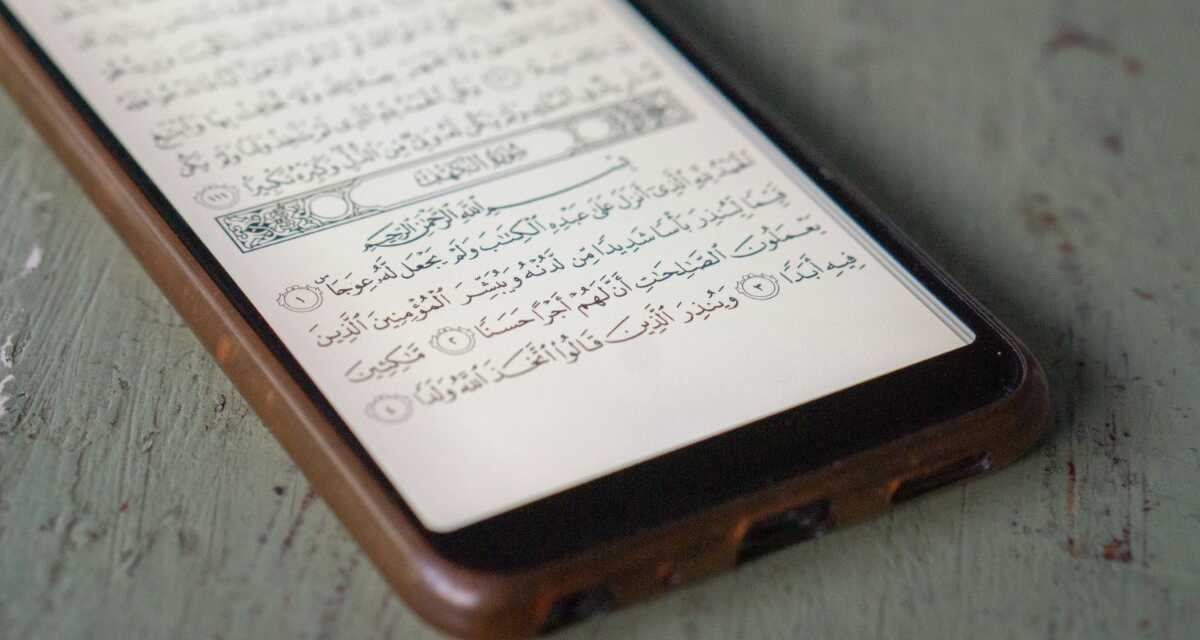
Could you please explain the meaning of above in verses 144 and 149 of surah Al Imran.
Praise
be to Allah.
The verses referred to in the question are (interpretation of
the meaning):
“Muhammad (blessings and peace of Allah be upon him) is no
more than a Messenger, and indeed (many) Messengers have passed away before
him. If he dies or is killed, will you then turn back on your heels (as
disbelievers)? And he who turns back on his heels, not the least harm will
he do to Allah, and Allah will give reward to those who are grateful”
[Aal ‘Imraan 3:144]
And
“O you who believe! If you obey those who disbelieve, they
will send you back on your heels, and you will turn back (from Faith) as
losers”
[Aal ‘Imraan 3:149].
With regard to the former, we have discussed its tafseer in
detail in fatwa no. 125877.
With regard to the latter verse, we may sum up the tafseer
thereon, bearing in mind the following points:
1.
The
context of the verse:
Sayyid Qutb (may Allah have mercy on him) said:
The unbelievers, the hypocrites and the Jews in Madinah
seized the opportunity created by the defeat of the Muslims to warn them
against following Muhammad. They painted to them in dark colours the gloomy
prospects of going to war and fighting the idolaters of the Quraysh and its
allies. In the aftermath of defeat, the social climate provides easy
opportunities to spread confusion and to weaken the trust of soldiers in
their leaders. By the same token the idea of establishing a peaceful accord
with the victors was painted in tempting colours. Personal grief was being
exploited as part of the wicked design aiming to destroy the Muslim
community and Islam altogether.
Hence, Allah warns the believers against giving heed to those
who have rejected the faith, because that obedience will inevitably result
in utter loss. Nothing good can come from it. It represents a complete
about-turn from a state of disbelief. A believer either continues to fight
those who cling to falsehood and reject faith, or turns on his heels — Allah
forbid — thus becoming an unbeliever. It is not possible for a believer to
take an in-between attitude, trying to maintain neutrality while at the same
time hanging on to his faith. He may harbour some such thoughts in the wake
of defeat and under the influence of calamity. He may even imagine that he
can withdraw from battle against a mightier power, and establish peace with
that enemy, and, at the same time, retain his faith. This, however, is a
great delusion. In the whole question of faith, a person who does not move
forward can only go backwards. If one does not fight disbelief, evil,
falsehood and tyranny, one must beat retreat and turn back on one’s heels to
embrace all this evil. A person whose faith does not stop him from obeying
unbelievers and having trust in them sacrifices, in fact, his very faith for
their sake. He is spiritually defeated when he befriends the enemies of his
faith and follows their directives. As he starts with defeat, he cannot
escape from it at the end. He is bound to revert to rejection of the faith,
although he may not imagine that such would be his end. A believer is
satisfied with his faith and leadership to such an extent that he has no
need to consult the enemies of his faith. If he listens to them once, he
actually begins the process of turning back on his heels. This is an
elementary and honest truism to which Allah draws the attentions of the
believers, warning them against it as He addresses in the name of faith.
2.
Scholarly views concerning this verse:
Ibn al-Jawzi (may Allah have mercy on him) said:
There are three views concerning “those who disbelieve”
1.
That this refers
to the hypocrites, according to the view of Ibn ‘Abbaas and Muqaatil.
2.
That it refers to
the Jews and Christians, as was the view of Ibn Jurayj
3.
That it refers to
the idol worshippers, as was the view of as-Suddi.
They said: they ordered the Muslims to recant their
religion.
End quote from Zaad al-Maseer fi ‘Ilm at-Tafseer
(1/333)
Shaykh Ibn ‘Uthaymeen (may Allah have mercy on him):
The words “If you obey those who disbelieve” are
general in meaning and include the Jews, Christians, mushrikeen, and
atheists who have no religion and do not worship anything. What is meant is:
if one of the disbelievers tells you to do something and you obey him, then
he will turn you back on your heels and you will be the loser.
End quote from Tafseer Soorah Aal ‘Imraan (2/280)
Shaykh Ibn Sa di (may Allah have mercy on him) said:
Here Allah forbids the believers to obey the disbelievers,
whether they be hypocrites or polytheists, for if they do so, they intend
only to do them harm; their goal is to bring them back to disbelief, which
leads only to doom and loss.
Then Allah states that He is their protector and helper; this
is glad tidings that He will take care of them by His kindness and protect
them from all kinds of evil.
This provides encouragement for them to take Him alone as
protector and helper, to the exclusion of all others. One aspect of His
protection and help is that He promised them that He would cast dread into
the hearts of their enemies among the disbelievers; this refers to great
fear that would prevent them from achieving many of their goals. And He, may
He be glorified and exalted, did indeed do that.
End quote from Tafseer as-Sa‘di (151)
4.
The scholars
differed as to what is meant by “obedience to the disbelievers” which is
discouraged
There are several opinions, as follows:
It says in Mafaateeh al-Ghayb (9/383):
“If you obey those who disbelieve” cannot be
interpreted as referring to obeying them in everything that they say; rather
it must refer to something specific:
It was said (that what is meant is): if you obey them in that
which they tell you to do on the day of Uhud, namely leaving Islam;
Or if you obey them with regard to everything that they tell
you to do of misguidance;
Or if you follow their advice;
or by not fighting them, which is when they said, “If they
had stayed with us, they would not have died or been killed” [Aal ‘imraan
3:156 – interpretation of the meaning].
Al-‘Allaamah at-Taahir ibn ‘Ashoor (may Allah have mercy on
him) said:
What is meant here is to warn the believers against
entertaining any notion of entering into a treaty with the mushrikeen and
accepting their promise of safety safety, because that would be showing
weakness before them and expressing a need for them. Moreover, if they
inclined towards them, they would gradually lead them astray, by pretending
that they had no resentment towards their religion, until they made them
turn back from their religion, because they would never be pleased with them
until they went back to their former religion, and turning back on their
heels in this manner would be the ultimate result. This is applicable to the
way in which the Muslims of Andalusia obeyed the tyrants of Jalaaliqah. It
is also applicable to the foolish opinion of the one who said “If we speak
to ‘Abdullah ibn Ubayy he will get a promise of safety for us from Abu
Sufyaan”, as is indicated by the words “Nay, Allah is your Maula (Patron,
Lord, Helper and Protector, etc.)” [Aal ‘Imraan 3:150].
It may be that what is meant by obedience is obedience to
words and gestures i.e. obeying commands, and this is what the hypocrites
said to them: “If Muhammad was a Prophet he would not have been killed [as
there was a rumour to that effect]; go back to your brothers and your
(former) religion.” What is meant by turning back on one’s heels in this
context is that that would happen immediately if they did obey them.
End quote from at-Tahreer wa’t-Tanweer (4/122)
And Allah knows best.


