
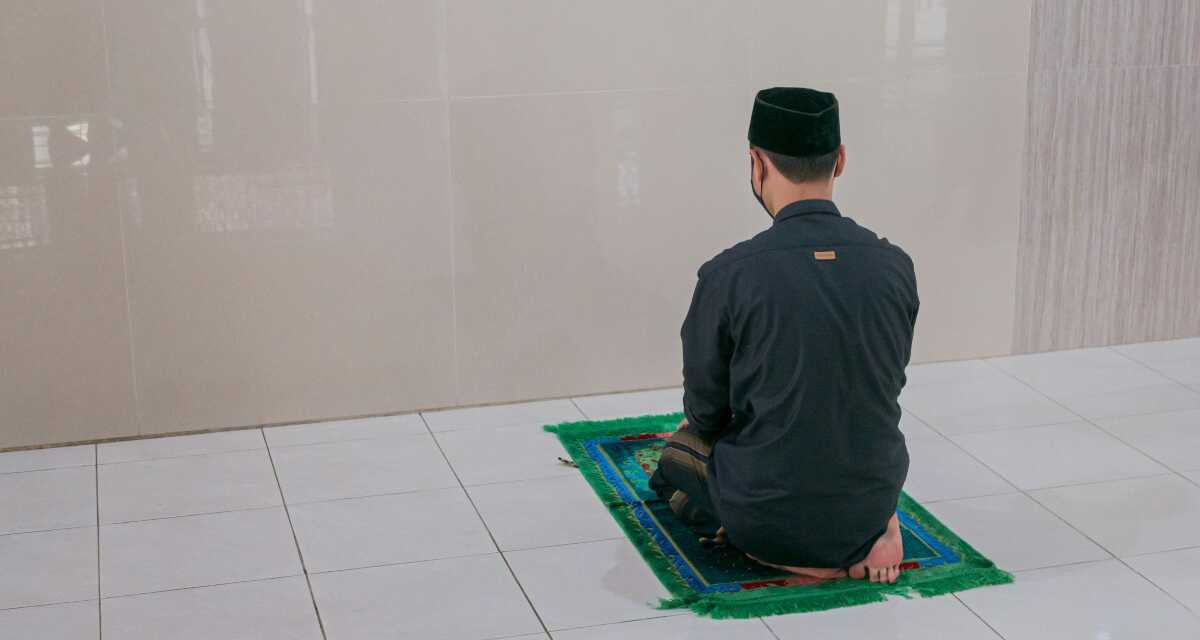
What is the virtue of Taraaweeh prayers?.
Praise be to Allaah.
Firstly:
Taraaweeh prayer is Sunnah mustahabbah (i.e., recommended)
according to scholarly consensus, and comes under the heading of qiyaam
al-layl (night prayers). It is supported by the evidence of the Qur’aan and
Sunnah which encourages qiyaam al-layl and describes its virtues. We have
already quoted some of this evidence in Question no.
50070.
Secondly:
Praying qiyaam in Ramadaan is one of the greatest acts of
worship by means of which a person can draw closer to his Lord in this
month. Al-Haafiz Ibn Rajab said: Note that in the month of Ramadaan the
believer engages in jihad al-nafs on two fronts: during the day by fasting
and during the night by praying qiyaam. Whoever combines these two types of
jihad will be given reward without limit.
There are some ahaadeeth which speak specifically about
praying qiyaam in Ramadaan and describe the virtue of so doing. For
example:
Al-Bukhaari (37) and Muslim (759) narrated from Abu Hurayrah
that the Messenger of Allaah (peace and blessings of Allaah be upon
him) said: “Whoever prays qiyaam in Ramadaan out of faith and in the hope of
reward, his previous sins will be forgiven.”
“Whoever prays qiyaam in Ramadaan” means spends its nights in
prayer.
“Out of faith” means, believing in Allaah’s promise of
reward.
“And in the hope of reward” means, seeking the reward and
with no other intention such as showing off etc.
“Will be forgiven his previous sins”:
Ibn al-Mundhir was
certain that this includes both minor and major sins, but al-Nawawi said:
What is known among the fuqaha’ is that this applies only to forgiveness of
minor sins, not major sins. Some of them said: It may mean that the burden
of major sins is reduced, so long as so long as there are no minor sins.
From Fath al-Baari.
Thirdly:
The believer should be keen to strive in worship in the last
ten nights of Ramadaan more than at other times, because in these ten nights
is Laylat al-Qadr, of which Allaah says (interpretation of the meaning):
“The Night of Al-Qadr (Decree) is better than a thousand
months”
[al-Qadr 97:3]
Concerning the reward of
qiyaam on this night, it is narrated that the Prophet (peace and
blessings of Allaah be upon him) said: “Whoever spends Laylat al-Qadr in
prayer out of faith and in the hope of reward, his previous sins will be
forgiven.” Narrated by al-Bukhaari, 1768; Muslim, 1268.
Hence the Messenger of Allaah (peace and blessings of
Allaah be upon him) used to strive hard in worship in the last ten nights as
he did not do at other times.
Narrated by Muslim, 1175.
Al-Bukhaari (2024) and Muslim (1174) narrated that ‘Aa’ishah
(may Allaah be pleased with her) said: “When the last ten days began, the
Prophet (peace and blessings of Allaah be upon him) would tie his lower
garment (izaar) tight and stay up at night, and wake his family.”
“The last ten days” means the last ten days of Ramadaan.
“tie his lower garment (izaar) tight” – it was said that this
is a metaphor for striving hard in worship, or for keeping away from his
wives, and it may be that it includes both meanings.
“stay up at night” means staying up and praying and doing
other acts of worship.
“and wake his family” means, he would wake them up to pray at
night.
Al-Nawawi said:
This hadeeth indicates that it is mustahabb to do more acts
of worship during the last ten nights of Ramadaan, and to stay up at night
to worship.
Fourthly:
We should be keen to pray qiyaam al-layl in Ramadaan in
congregation, and to stay with the imam until he finishes praying. In this
way the worshipper will attain the reward for praying the whole night, even
if he only spends a short part of the night in prayer. And Allaah is the
Owner of great bounty.
Al-Nawawi (may Allaah have mercy on him) said:
The scholars are agreed that it is mustahabb to pray
Taraaweeh, but they differed as to whether it is better for a person to pray
on his own at home or in congregation in the mosque. Al-Shaafa’i and most of
his companions, Abu Haneefah, Ahmad and some of the Maalikis and others said
that it is better to pray it in congregation, as ‘Umar ibn al-Khattaab and
the Sahaabah (may Allaah be pleased with them) did and as the Muslims
continued to do.
Al-Tirmidhi (806) narrated that Abu Dharr said: The Messenger
of Allaah (peace and blessings of Allaah be upon him) said: “Whoever
prays qiyaam with the imam until he finishes, will be recorded as having
spent the whole night in prayer.”
Classed as saheeh by al-Albaani in Saheeh al-Tirmidhi.
And Allaah knows best.


