
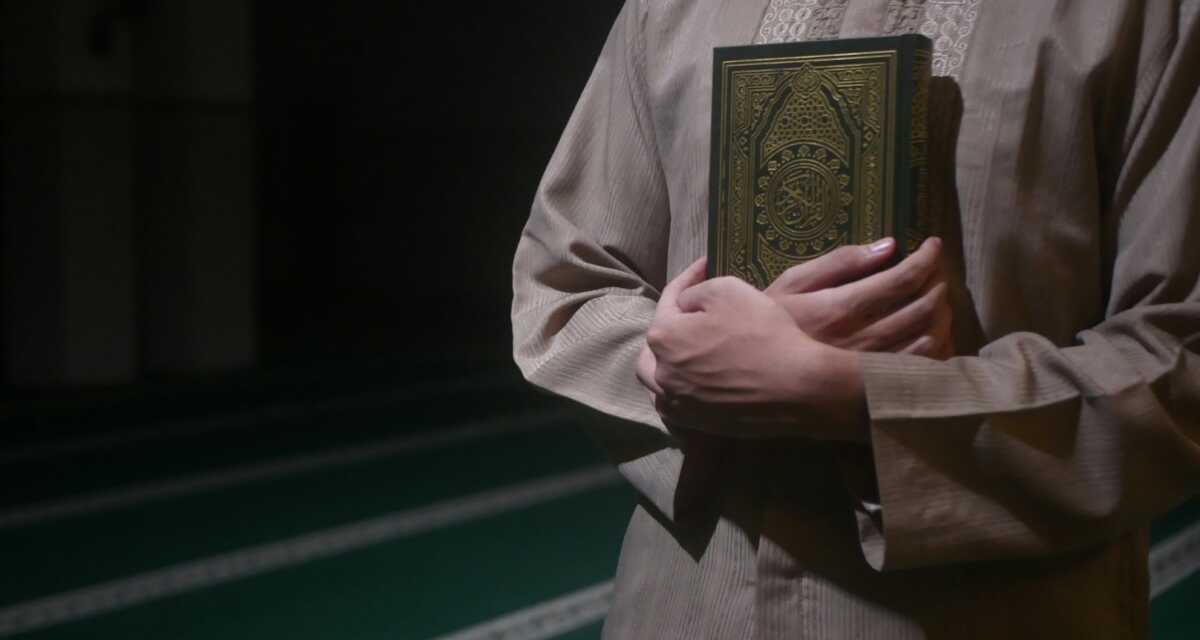
In surah Luqman is said:
[Verily Allah, with Him (Alone) is the knowledge of the Hour, He sends down the rain, and knows that which is in the wombs. No person knows what he will earn tomorrow, and no person knows in what land he will die. Verily, Allah is All-Knower, All-Aware (of things).] [31: 34].
Does this ayah means that this five things knows only Allah and that He did not reveal some of these five things even to prophets ?
For example do we say that even prophet Muhammad, peace be upon him, was not informed in which land he will die, or we do not ask about it ? I hope so you understand my question, I want to ask are these five things excluded from ayah:
[“(He Alone) the All-Knower of the Ghâib (unseen), and He reveals to none His Ghâ’ib (unseen).” Except to a Messenger (from mankind) whom He has chosen (He informs him of unseen as much as He likes), …] [72: 26-27]. ?
Praise
be to Allah
Firstly:
Allah, may He be exalted, says (interpretation of the
meaning):
“Say: ‘None
in the heavens and the earth knows the Ghaib (unseen) except Allah, nor can
they perceive when they shall be resurrected’”
[an-Naml 27:65].
This indicates that knowledge of the unseen, in general
terms, is something that belongs only to the Knower of the unseen, the Lord
of the Worlds. However Allah, may He be exalted, may disclose to whomever He
wills of His creation whatever He wills of His unseen. He, may He be
exalted, says (interpretation of the meaning):
“(He Alone) the All-Knower of the Ghaib (unseen), and He
reveals to none His Ghaib (unseen).
Except to a Messenger (from mankind) whom He has chosen (He
informs him of unseen as much as He likes), and then He makes a band of
watching guards (angels) to march before him and behind him”
[al-Jinn 72:26, 27].
Al-Qurtubi (may Allah have mercy on him) said:
The scholars (may Allah have mercy on them) said: The fact
that He, may He be glorified, praised Himself for having knowledge of the
unseen, which He has kept to Himself, to the exclusion of His creation,
indicates that no one knows the unseen except Him. Then He made an exception
in the case of those with whom He is pleased of His Messengers, so He grants
them knowledge of whatever He wills of His unseen, by means of revelation to
them, which He makes a miracle for them and evidence of the truthfulness of
their Prophethood. End quote.
Tafseer al-Qurtubi
(19/28)
The scholars of the Standing Committee for Issuing Fatwas
said:
Knowledge of unseen matters is something that belongs
exclusively to Allah, may He be exalted, and none of His creation – jinn or
otherwise – knows it except what Allah has revealed concerning it to
whomever He wills of His angels or His Messengers. End quote.
Fataawa al-Lajnah ad-Daa’imah
(1/346)
See the answer to question no. 101968
Secondly:
Allah, may He be exalted, says (interpretation of the
meaning):
“Verily,
Allah! With Him (Alone) is the knowledge of the Hour, He sends down the
rain, and knows that which is in the wombs. No person knows what he will
earn tomorrow, and no person knows in what land he will die. Verily, Allah
is All-Knower, All-Aware (of things)”
[Luqmaan 31:34].
Al-Bukhaari (1039) narrated that Ibn ‘Umar said: The
Messenger of Allah (blessings and peace of Allah be upon him) said: “The
keys of the unseen are five, which no one knows except Allah: no one knows
what will happen tomorrow, no one knows what is in the wombs, no soul knows
what it will earn tomorrow, no soul knows in which land it will die, and no
one knows when rain will come.”
No one has complete knowledge of these five matters, in terms
of all their details, circumstances and timings, except Allah, but some
information about them may be known to some people, and at some times but
not others either through knowledge from Allah by way of revelation, which
can only be granted to the Prophets, or through knowledge by way of
inspiration, which only happens to the siddeeqs (the strong and true in
faith) and the righteous, or through empirical evidence and the like, by way
of worldly science and knowledge, or on the basis probability and
observation.
As for perfect knowledge of these five things and others,
they are matters of the unseen which no one knows except Allah.
Ibn Rajab (may Allah have mercy on him) said:
These five are only mentioned because people need to know
that only Allah has knowledge of them, and comprehensive knowledge of them
is something that belongs only to Allah, and that definitive knowledge of
each one of them belongs only to Him.
As for finding out about some minor aspect of them in a
non-definitive manner, which may be right or wrong, this is not ruled out,
because it does not come under the heading of that knowledge which belongs
only to Allah and not to anyone else.
We noted above that the Prophet (blessings and peace of Allah
be upon him) was given knowledge of all things, except these five. As for
Allah, may He be glorified, giving him knowledge of one of these things,
that is not ruled out either. That is included in the verse in which He, may
He be exalted, says (interpretation of the meaning):
“(He Alone)
is the All-Knower of the Ghaib (unseen), and He reveals to none His Ghaib
(unseen).
Except to a Messenger (from mankind) whom He has chosen (He
informs him of unseen as much as He likes), and then He makes a band of
watching guards (angels) to march before him and behind him”
[al-Jinn 72:26, 27].
But knowledge of the Hour is something that belongs
exclusively to Allah, and He has not told anyone else about it, as we have
seen above in the hadith about Jibreel questioning the Prophet (blessings
and peace of Allah be upon him). The same applies to comprehensive knowledge
of what will happen tomorrow.
With regard to knowledge of what is in the wombs, Allah, may
He be exalted, alone has knowledge of it, before He instructs the angel of
the wombs to shape it and write its destiny, then after that Allah may
inform whomever He wills of His creation about it, as He informs the angel
of the wombs about it.
If he is one of the Messengers, then he may come to know
about it with certainty.
If he is someone else, one of the siddeeqs or the righteous,
then Allah, may He be exalted, inform him of it indirectly, as az-Zuhri
narrated from ‘Urwah, from ‘Aa’ishah, that when Abu Bakr was dying, he said
to her, among other things: You have two brothers and two sisters. I said: I
know about my two brothers, but who are my two sisters? He said: What is in
the womb of the daughter of Khaarijah; I think it is a girl.
According to another report, he said: It has occurred to me
that it is a girl, so take good care of her. And Umm Kulthoom was born.
With regard to anyone knowing what he will earn tomorrow, in
what land he will die, or when rain will come, in general terms no one knows
this except Allah. As for knowing some details thereof, if Allah discloses
that to some of His Messengers, this is an exemption from this general
meaning, as the Prophet (blessings and peace of Allah be upon him) was told
of many matters of the future unseen, of which he spoke.
In Tabook he said: “Tonight a strong wind will blow, so no
one will be standing up”, and that is indeed what happened.
Learning about the blowing of the wind is akin to learning
about the falling of rain at a particular time.
Similarly, the Prophet (blessings and peace of Allah be upon
him) told his daughter Faatimah, when he was ill, that he would die of this
illness.
It was narrated from him (blessings and peace of Allah be
upon him) that he said: “The area between my grave and my minbar is one of
the gardens of Paradise.” Narrated by Imam Ahmad from the hadith of Abu
Sa‘eed al-Khudri, and by an-Nasaa’i from the hadith of Umm Salamah, from the
Prophet (blessings and peace of Allah be upon him).
This indicates that he knew of the place of his death and
burial.
And it was narrated from him that he said: “No Prophet dies
but he is buried in the place where he dies.”
Narrated by Ibn Maajah and others.
With regard to the fact that some people other than the
Prophets may come to know some information about the unseen, there is no
need – as stated above – to exclude that (and say that they cannot know such
things), because their knowledge is not based on certainty; rather it is
based on what they think is most likely to be the case, and some of it is
mere illusion, conjecture and speculation and none of that constitutes
knowledge. So there is no need to exclude it from that which that only
Allah, may He be glorified and exalted, knows, as stated above. And Allah,
may He be glorified and exalted, knows best. End quote.
Fath al-Baari
(9/269-27 2)
The scholars of the Standing Committee for Issuing Fatwas
said:
What the verse means is that Allah, may He be exalted, has
kept knowledge of the Hour to Himself, so no one knows its time except Him.
So no angel who is close to Him and no Prophet who was sent knows its
appointed time, although Allah has told them of its signs and portents.
No one knows when rain will fall or in what place it will
fall except Allah, although people of experience may know the signs of that
and when the causes thereof will come together, but that is not exact
knowledge; rather it is based on probability with some element of
speculation, and it may not even happen as they think. Allah, may He be
glorified, has also kept to Himself knowledge of what is in the wombs, in
detail, in terms of whether it will be formed or unformed, its growth,
whether it will survive to full term or be miscarried before that, alive or
dead, whether it will be sound or suffer defects, and what it may face of
problems, without Him acquiring that knowledge from somewhere else or basing
His knowledge on some measures and experiments. Rather He knows how it will
be and how it will develop before it comes into existence and before the
means of its existence come into being, for He is the One Who decrees and
creates all means and measures and has precise knowledge that will
materialise, and what happens will never be different from what He knows,
for He is Allah, may He be glorified.
Allah may allow man to know some of what is in the wombs,
whether it is male or female, sound or defective, how soon birth will occur
or whether there will be a miscarriage before the pregnancy reaches full
term, but all of that is by the help of Allah whereby He enables humans to
develop means of knowing such things, such as diagnostic imaging. It does
not come from something that humans possess in and of themselves without
taking external measures, and that knowledge comes after Allah commands the
angel to give shape to the foetus, and it does not include everything in the
womb; rather it is general in nature, with the possibility of error on
occasion.
No soul knows what it will earn tomorrow in either spiritual
or worldly terms. That is also a matter concerning which Allah has kept
knowledge of the details to Himself. People may expect to make gains or
incur losses in general terms, which may give them hope or an incentive to
strive, or it may create fear and make them refrain, based on the signs and
circumstances around them. But none of that can be called certain knowledge
(because it is more akin to speculation).
Similarly, no soul knows in what land it will die, on land or
sea, in his own land or elsewhere. Only Allah knows the details of that, for
He, may He be glorified, has perfect knowledge and encompasses all things,
seen and unseen, visible and hidden.
In conclusion, the knowledge of Allah comes from His own
Self; it is not acquired from elsewhere and it is not dependent on measures
or experimentation. He knows what has happened and what will happen, and His
knowledge is not mixed with any doubt or any possibility that it will not
materialise. His knowledge encompasses all beings in detail, great and
small, unlike the knowledge of others. May He be glorified. End quote.
Fataawa al-Lajnah ad-Daa’imah
(2/174-176)
Thirdly:
The Prophet (blessings and peace of Allah be upon him) was
aware during his final illness that he would die of it.
At-Tirmidhi (3872) narrated that ‘Aa’ishah, the Mother of the
Believers, said: When the Prophet (blessings and peace of Allah be upon him)
was sick, Faatimah bent down and embraced him and kissed him, then she
lifted her head and wept. Then she embraced him again, then she lifted her
head and smiled. When the Prophet (blessings and peace of Allah be upon him)
died, I said to her: Do you remember when you bent down and embraced the
Prophet (blessings and peace of Allah be upon him), then you raise your head
and wept, then you bent down and embraced him, then you raised your head and
smiled? What made you do that? She said: He told me that he was going to die
of that sickness, so I wept. Then he told me that I would be the first of
his family to join him, and that was when I smiled.
Classed as saheeh by al-Albaani in Saheeh at-Tirmidhi.
It also seems that he (blessings and peace of Allah be upon
him) knew where he would die, as mentioned above in the quotation from Ibn
Rajab (may Allah have mercy on him).
And Allah knows best.


