
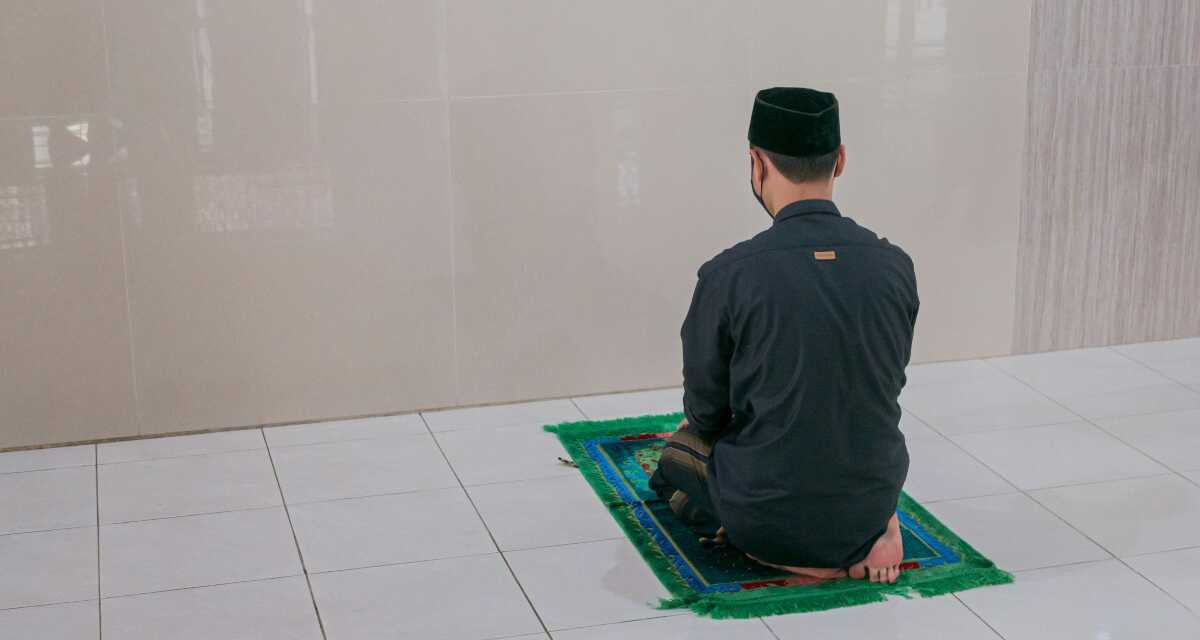
When a Muslim does an action, what conditions make it acceptable and therefore rewarded by Allah. Is it simply that you intended to follow the Quran and Sunnah, and therefore you will be rewarded even though you may have been wrong in your action. Or is it that you must have the intention, but you also need to follow the correct Sunnah as well?
Praise be to Allah.
For
acts of worship to be acceptable to Allah and for a person to be rewarded
for them, there are two conditions which must be met:
The
first condition: the act of worship should be devoted to Allah Alone. Allah
says (interpretation of the meaning):
“And
they were commanded not, but that they should worship Allah, and worship
none but Him Alone (abstaining from ascribing partners to Him).”
[al-Bayyinah 98:5]
The
meaning of worshipping Allah alone is that the person should intend in all
his words and deeds, both inward and outward, to seek the Face of Allah
(i.e., His pleasure). Allah says (interpretation of the meaning):
“And
who has (in mind) no favour from anyone to be paid back,
Except
to seek the Countenance of his Lord, the Most High.”
[al-Layl 92:19]
“(Saying): “We feed you seeking Allah’s Countenance only. We wish for no
reward, nor thanks from you.”
[al-Insan 76:9]
“Whosoever desires (by his deeds) the reward of the Hereafter, We give him
increase in his reward, and whosoever desires the reward of this world (by
his deeds), We give him thereof (what is decreed for him), and he has no
portion in the Hereafter.”
[al-Shoora 42:20]
“Whosoever desires the life of the world and its glitter, to them We shall
pay in full (the wages of) their deeds therein, and they will have no
diminution therein.
They
are those for whom there is nothing in the Hereafter but Fire, and vain are
the deeds they did therein. And of no effect is that which they used to do.”
[Hood
11:15-16]
It was
narrated that ‘Umar ibn al-Khattab (may Allah be pleased with him) said: “I
heard the Messenger of Allah (peace and blessings of Allah be upon him) say:
‘The
reward of deeds depends upon the intentions and every person will get the
reward according to what he has intended. So whoever emigrated for worldly
benefits or to marry a woman, his emigration was for what he emigrated
for.’”
(Narrated by al-Bukhari, Bad’ al-Wahy, 1).
It was
narrated by Muslim from Abu Hurayrah (may Allah be pleased with him)
that
the Messenger of Allah (peace and blessings of Allah be upon him) said:
“Allah, may He be blessed and exalted, says: ‘I am so self-sufficient that I
am in no need of having an associate. Thus he who does an action for someone
else’s sake as well as Mine will have that action renounced by Me to him
whom he associated with Me.’” (Narrated by Muslim, al-Zuhd wa’l-Raqaiq,
5300)
The
second condition is that the action should be in accordance with the only
way which Allah has prescribed for worship, which is by following the
Prophet (peace and blessings of Allah be upon him) in the laws that he has
brought. It was narrated that the Prophet (peace and blessings of Allah be
upon him) said: “Whoever does any action that is not in accordance with this
matter of ours (i.e., Islam), will have it rejected.” (Narrated by Muslim,
al-Aqdiyyah, 3243).
Ibn
Rajab (may Allah have mercy on him) said: “This hadeeth (narration) forms
one of the most important principles of Islam. It is like a scale for
weighing up deeds according to their outward appearance, just as the hadeeth
‘The reward of deeds depends upon the intentions’ is the means of weighing
up the inner nature of deeds. Just as every action which is not intended for
the sake of Allah brings no reward to the one who does it, so too every deed
which is not in accordance with the command of Allah and His Messenger will
also be rejected and thrown back at the one who does it. Everyone who
innovates in Islam something for which Allah and His Messenger have not
granted permission, that thing has nothing to do with Islam.
(Jami’
al-‘Uloom wa’l-Hikam, part 1, p.176)
The
Prophet (peace and blessings of Allah be upon him) enjoined following his
Sunnah (ways) and teachings, and made them binding. He (peace and blessings
of Allah be upon him) said: “You have to follow my Sunnah (way) and the way
of my rightly-guided successors (al-khulafa’ al-rashidoon); bite onto it
with your eyeteeth (i.e., cling firmly to it).” And he warned against bid’ah
(innovation), as he said: “Beware of newly-invented matters, for every
newly-invented matter is a going astray.” (narrated by al-Tirmidhi,
al-‘Ilm, 2600; classed as saheeh/authentic by al-Albani in Saheeh
Sunan al-Tirmidhi, no. 2157)
Ibn
al-Qayyim said: “Allah has made devotion of worship to Him alone and
following the Sunnah the means of deeds being accepted; if these conditions
are not met, then deeds are unacceptable.”
(al-Rooh,
1/135)
Allah
says (interpretation of the meaning):
“Who
has created death and life that He may test you which of you is best in
deed.”
[al-Mulk 67:2]
Al-Fudayl said: “’best in deed’ means, most devoted to Allah alone and most
in accordance with the Sunnah.
And
Allah is the Source of strength.


