
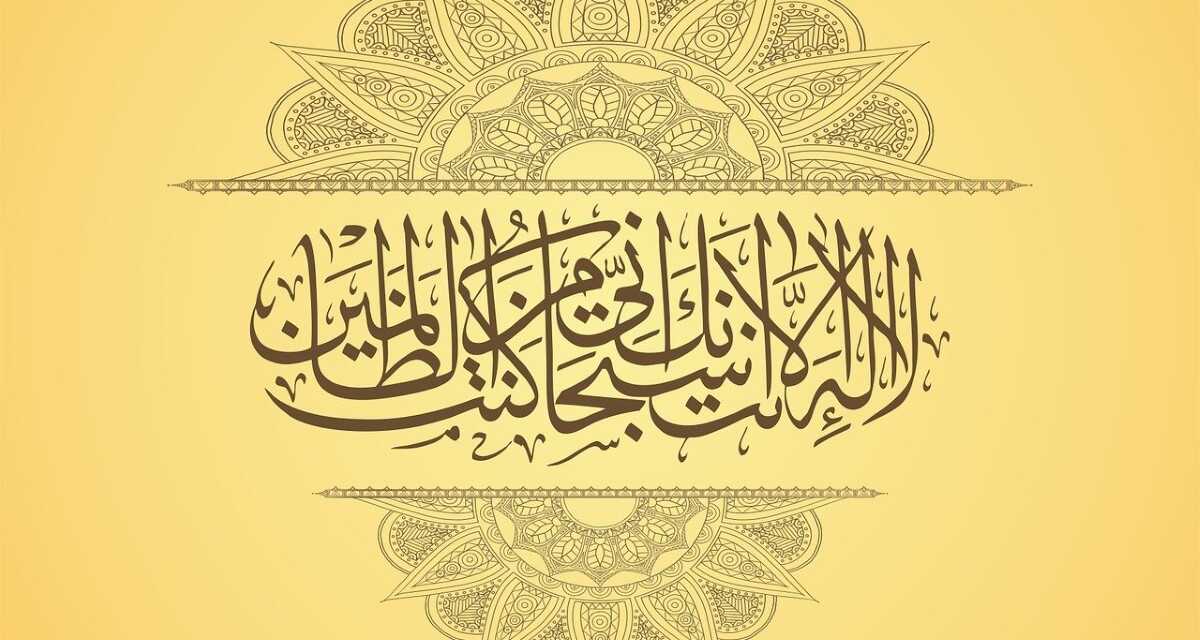
What is Durode Taj? What is the meaning? If you could please explain me,
Praise be to Allah.
Du‘aa’ at-taaj is a made-up, innovated
format of sending blessings upon the Prophet (blessings and peace of Allah
be upon him). It is called at-taaj (crown), and contains weird phrases; it
is not permissible to recite it because of what it contains of shirk
(association of others with Allah) and exaggeration about the Prophet
(blessings and peace of Allah be upon him), and because it is a made-up
format that is contrary to that which is proven in the Sunnah. Reciting
such things, with what they contain of things that are contrary to Islamic
teachings, is forsaking the Sunnah and replacing it with bid ‘ah
(innovation).
Among the things mentioned in this format
that are contrary to Islamic teachings are the following:
~1~
They describe the Prophet (blessings and
peace of Allah be upon him) as “the one who wards off calamity, disease,
famine, sickness and pain.” This description is tantamount to shirk, because
the only One Who wards off calamity and disease, grants relief from harm and
brings what is good is Allah alone. Allah, may He be glorified and exalted,
says (interpretation of the meaning):
“And if Allah touches you with harm,
none can remove it but He, and if He touches you with good, then He is Able
to do all things”
[al-An‘aam 6:17]
“Is not He (better than your gods) Who
responds to the distressed one, when he calls Him, and Who removes the evil,
and makes you inheritors of the earth, generations after generations. Is
there any ilah (god) with Allah? Little is it that you remember!”
[an-Naml 27:62].
When harm befell the Prophets of Allah
(blessings and peace of Allah be upon them), they sought help from Allah
alone. Allah, may He be exalted, has told us of that in His book, as He says
(interpretation of the meaning):
“And (remember) Nooh (Noah), when he
cried (to Us) aforetime. We listened to his invocation and saved him and his
family from great distress”
[al-Anbiya’ 21:76]
“And (remember) Ayoob (Job), when he
cried to his Lord: ‘Verily, distress has seized me, and You are the Most
Merciful of all those who show mercy.’
So We answered his call, and We removed
the distress that was on him”
[al-Anbiya’ 21:83, 84].
Al-Bukhaari (5675) and Muslim (2191)
narrated from ‘Aa’ishah (may Allah be pleased with her) that when the
Messenger of Allah (blessings and peace of Allah be upon him) visited the
sick person, or a sick person was brought to him, he would say:
“Adhhib al-ba’s Rabb an-naas, wa’shfi anta al-Shaafi,
laa shifaa’a illa shifaa’uka shifaa’ laa yughaadir saqaman (Take away
the pain, O Lord of mankind, and grant healing, for You are the Healer, and
there is no healing but Your healing that leaves no trace of sickness).”.
According to a verion narrated by al-Bukhaari,
it says: “Laa shaafi illa anta (There is no Healer but You).”
~2~
They say in this du‘aa’, “Jibreel is his
servant.” This is a made-up, innovated idea. It is not permissible to
describe Jibreel (peace be upon him), the Angel of Revelation, as the
servant of the Prophet (blessings and peace of Allah be upon him), when
Allah, may He be exalted, has described him in the highest terms, as He said
(interpretation of the meaning):
“Which the trustworthy Rooh (Jibreel
(Gabriel)) has brought down;
Upon your heart (O Muhammad SAW) that
you may be (one) of the warners”
[ash-Shu‘ara’ 26:193, 194]
“Verily, this is the Word (this Quran
brought by) a most honourable messenger (Jibreel (Gabriel), from Allah to
the Prophet Muhammad (Peace be upon him)).
Owner of power, and high rank with
(Allah) the Lord of the Throne,
Obeyed (by the angels), trustworthy
there (in the heavens).”
[at-Takweer 81:19-21].
~3~
They describe the Prophet (blessings and
peace of Allah be upon him) as “raahat al-‘aashiqeen (the
comfort of those who love him)”, which is also a reprehensible description.
The word ‘ishq refers to going to extremes in love, and there cannot
be any extremes in terms of loving the Prophet (blessings and peace of Allah
be upon him). In Arabic this word is only applied to the relationship
between a man and a woman; it cannot be used to describe love as prescribed
in Islam. Ibn al-Jawzi (may Allah have mercy on him) said: ‘Ishq
according to the linguists can only refer to that which one may be
physically intimate with.
End quote from Talbees Iblees (p.
153)
To sum up:
This format is not permissible because of
what it contains of things that are contrary to Islamic teaching, and
because it is a made up, innovated format that is used by one who has no
knowledge of the Sunnah instead of adhering to the Sunnah. The Sahaabah said
to the Prophet (blessings and peace of Allah be upon him): O Messenger of
Allah, we know how to send salaams upon you, but how should we send
blessings upon you? He said: “Say: Allaahumma salli ‘ala Muhammadin wa
‘ala aali Muhammadin kama salayta ‘ala aali Ibraaheem, innaka hameedun
majeed; Allaahumma baarik ‘ala Muhammadin wa ‘ala aali Muhammadin kama
baarakta ‘ala aali Ibraaheem, innaka hameedun majeed (O Allaah, send
Your salaah (grace, honour and mercy) upon Muhammad and upon the
family of Muhammad, as You sent Your salaah upon the family of
Ibraaheem, You are indeed Praiseworthy, Most Glorious. O Allaah, send Your
blessings upon Muhammad and the family of Muhammad, as You sent Your
blessings upon the family of Ibraaheem, You are indeed Praiseworthy, Most
Glorious).”.
Narrated by al-Bukhaari (6357) and Muslim
(406).
The one who wants to send blessings
properly upon the Prophet (blessings and peace of Allah be upon him) should
send blessings upon him as he taught his companions to do, for there is no
better way of sending blessings upon him than that. Whoever ignores that and
chooses an innovated format that is contrary to sound belief has incurred a
great loss.
Adh-Dhahabi (may Allah have mercy on him)
said:
Anyone who does not adhere to the
Prophet’s Sunnah in his worship and wird will regret it and become a mystic
and will develop a bad attitude, and he will miss out on a great deal of
good that he would have attained by following the Sunnah of his Prophet, who
was kind and compassionate towards the believers and was keen to benefit
them.
End quote from Siyar A‘laam al-Muwaqqi‘een
(3/85)
Shaykh Ibn ‘Uthaymeen (may Allah have
mercy on him) said:
As for what is found in some books of
different formats of salawaat (blessings upon the Prophet) based on rhymed
prose and descriptions of the Prophet’s attributes, it may contain
descriptions that are applicable only to the Lord of the Worlds. So you
should avoid these things and flee from them as you would flee from a lion,
and do not be deceived by what is in them of eloquent prose that could make
the eyes weep and the heart melt. You should adhere to the original texts,
and shun this which has been written with no guidance or authority.
End quote from Fataawa Noor ‘ala ad-Darb
(8/2)
For more information, please see also the
answers to questions no. 88109 and
174685
And Allah knows best.


is-fabricated-and-reprehensible/&description=The%20%E2%80%9CDarood%20Taaj%E2%80%9D%20format%20of%20sending%20blessings%20upon%20the%20Prophet%20%28blessings%20and%20peace%20of%20Allah%20be%20upon%20him%29%20is%20fabricated%20and%20reprehensible&media=https://www.islamguide.info/wp-content/uploads/2018/05/islam-guide-img-67-150x150.jpg)