
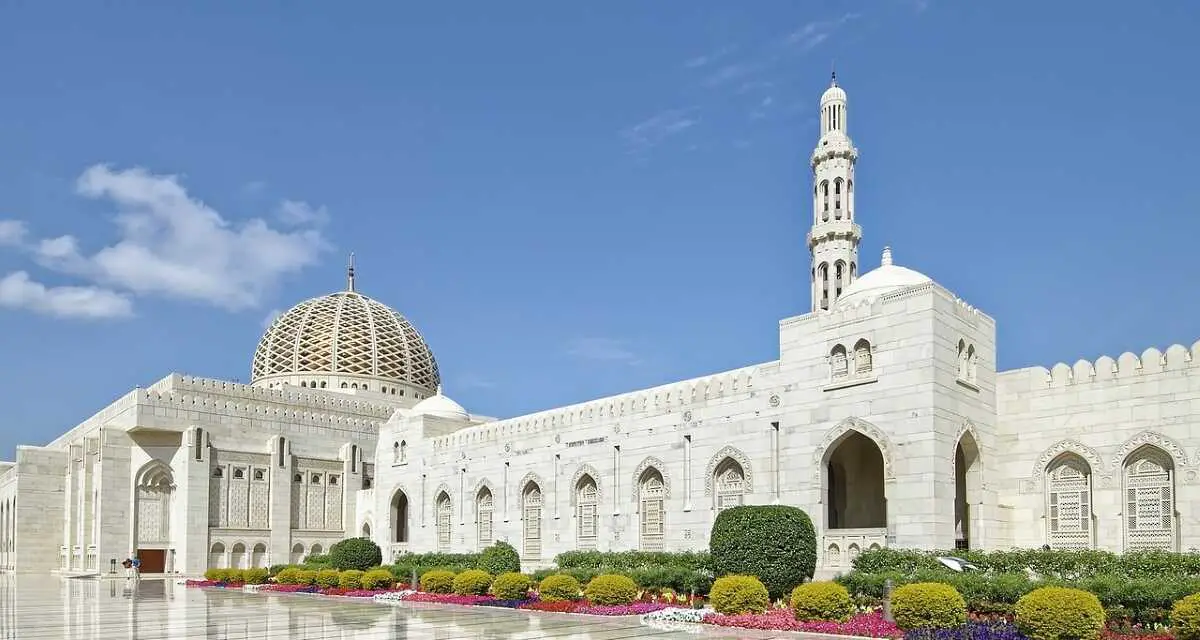
Can one go to Al Haram (the Sacred Mosque) to pray for one’s needs, e.g to pray for cure from sickness , to pray to have children, etc. Also, can one fast for some days for the purpose of requesting one’s needs from Allah for the reasons stated above? (i.e. to pray for children, etc).
Praise be to Allah.
There
is no reason why a Muslim should not pray in al-Masjid al-Haram for the
purpose of supplication, but it is better for him not to restrict his
intention in the prayer to supplication. Rather his intention should be to
worship Allah through this prayer and to hope for its reward in the
Hereafter. Moreover, prayer includes dhikr (remembrance of Allah), reciting
the Quran, bowing, prostrating and du’a(supplication), so the du’a should
just be a part of the prayer; it is not the primary purpose. Al-Masjid
al-Haram is one of the blessed and most venerated places, so if a person
prays and calls upon Allah whilst prostrating, for example – then he will
have combined the virtue of the place with the virtue of the action. If this
is done during the last third of the night, he will also add the virtue of
the time.
Shaykh
al-Islam Ibn Taymiyah said:
With
regard to the words of the Prophet (peace and blessings of Allah be upon
him), “As for ruku’ (bowing position), glorify your Lord therein, and as for
sujood (prostration) strive in du’a therein, because then it is more likely
that you will be answered” (narrated by Muslim, 479, from the hadeeth of Ibn
‘Abbas (may Allah be pleased with him)) – this contains the command to
glorify Allah in ruku’, and the command to supplicate when prostrating
indicates that du’a in sujood is more likely to be answered than in ruku’.
Hence he said, “because then it is more likely that you will be answered”.
And he said, “The closest that the slave is to his Lord is when he is
prostrating.” (Narrated by Muslim 482 from the hadeeth of Abu Hurayrah (may
Allah be pleased with him)). This is a command that du’a should be said in
sujood.
Majmoo’ al-Fatawa,
22/378
And he
said:
Du’a
is answered when rain is falling, when battle is joined, when the adhan and
iqaamah (call to prayer) are given, following prayers, when prostrating, and
when offered by one who is fasting, one who is travelling and one who is
oppressed, and so on. All of this is narrated in well-known haadeeths
(reports) in the books of Saheeh and Sunan. Du’a is also likely to be
answered in the sacred places such as ‘Arafah, Muzdalifah, Mina, the
Multazim and other sacred places in Makkah, and in the mosques in general.
The greater the virtue of the mosque – such as the three Sacred Mosques [in
Makkah, Madeenah and Jerusalem] – the better prayers and du’as are in them.
Majmoo’ al-Fatawa, 27/129-130
On the
other hand it may be said:
Doing
righteous deeds in the hope that du’a will be answered is something that is
prescribed in sharee’ah. Hence doing wudu and praying in al-Masjid al-Haram
may be included among the righteous deeds that may be done before starting
du’a in the hope that that the du’a will be answered.
It was
narrated from ‘Uthman ibn Hunayf (may Allah be pleased with him) that a
blind man came to the Prophet (peace and blessings of Allah be upon him) and
said: Pray to Allah to heal me. He said, “If you wish, you may delay the
reward until the Hereafter, for that is better, or if you wish, I will
supplicate for you.” He said, Supplicate. So he told him to do wudu and do
it well, and to pray two rak’ahs (units of prayer), and to say this du’a: “Allahumma
inni as’aluka wa atawajjahu ilayka bi Muhammadin Nabi al-rahmah. Ya Muhammad
inni qad tawajjahtu bika ila rabbiy fi hajati hadhihi li tuqda. Allaahumma
shaffi’hu fiyya (O Allah, I ask of You and I turn my face towards You by
the virtue of Muhammad the Prophet of Mercy. O Muhammad, I have turned my
face by virtue of you to my Lord concerning this need of mine so that it may
be met. O Allah, accept his intercession concerning me).”
Narrated by al-Tirmidhi, 3578; Ibn Majah, 1385; this hadeeth was classed as
saheeh (authentic) by al-Tirmidhi and by al-Albani in Saheeh al-Jami’,
1279
The
Prophet (peace and blessings of Allah be upon him) commanded him to do wudu
and pray two rak’ahs before he supplicated; this indicates that prayer is
one of the righteous deeds by virtue of which a person’s du’a may be more
likely to be answered, and that may be one of the causes of the du’a being
answered.
With
regard to fasting, what has been said with regard to prayer may also be said
with regard to fasting. The intention behind it should be to worship Allah
by means of this great act of worship, and to attain the reward for it in
the Hereafter, and to fear Allah and earn His pleasure. Then if he is
fasting, it is mustahabb (desirable) for the fasting person to supplicate a
lot, for the du’a of the fasting person will be answered, especially at the
time of breaking the fast.
And
Allah knows best.


