
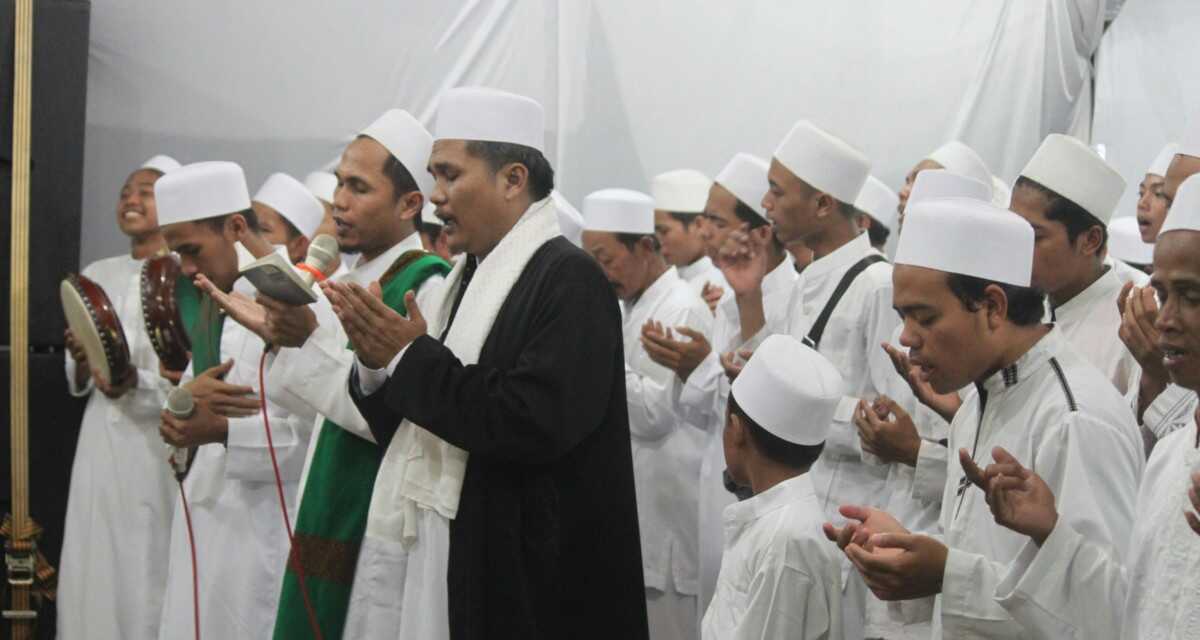
Is it permissible to raise the forefinger to offer supplication or say ameen instead of raising the hands, especially if a person is unable to raise his hands, such as offering supplication whilst driving the car?
Praise
be to Allah
It is proven that the Prophet (blessings and peace of Allah
be upon him) pointed with his forefinger when offering supplication on the
minbar on Friday. It was narrated from ‘Umaarah ibn Ru’aybah that he saw
Bishr ibn Marwaan on the minbar raising his hands, and he said:
How ugly are these two hands. I saw
the Messenger of Allah (blessings and peace of Allah be upon him) doing no
more than this with his hand, and he pointed with his index finger.
Narrated by Muslim (874).
Abu Dawood (1499) and an-Nasaa’i (1273) narrated that Sa‘d
ibn Abi Waqqaas (may Allah be pleased with him) said: The Prophet (blessings
and peace of Allah be upon him) passed by me when I was offering
supplication (gesturing) with my two fingers, and he said, “Make it one,
make it one,” and pointed with his forefinger. Classed as saheeh by al-Albaani
in Saheeh Abi Dawood.
In other words: gesture with one finger, because the One on
Whom you are calling is One. This was stated by al-Mubaarakfoori in
Tuhfat al-Ahwadhi, and by as-Sindi in his Haashiyah ‘ala Ibn Maajah.
This hadith may be understood as meaning that this was whilst
he was praying, or it may be understood as meaning that this was other than
in prayer. After researching the matter, we have not come across any
narration of the hadith to indicate that he was praying, and perhaps this is
what led some of the scholars to interpret it as pointing with the
forefinger when offering supplication in the prayer and otherwise.
Al-Mannaawi said in Fayd al-Qadeer (1/238):
Some of them claimed that this was in the tashahhud, but
there is no evidence for that. End quote.
Shaykh al-Islam Ibn Taymiyah (may Allah have mercy on him)
said, commenting on the hadith of Sa‘d referred to above:
They said: What he meant was: point with one finger, for the
One on Whom you are calling is One. This is a clear statement that the
pointing is referring to Allah, as he said to him, “Make it one, make it
one,” i.e., make it one finger. So if the pointing referred to anything
other than Allah, it would make no difference whether it was one finger or
more, thus it is known that because the pointing referred to Allah, and He
is One God, he instructed him not to point except with one finger, not two.
Similarly, the Sunan indicate that one is the point with one finger
when offering supplication in the prayer, on the minbar on Friday, and in
other cases. End quote.
Bayaan Talbees al-Jahamiyyah
(2/443).
Al-Bahooti al-Hanbali (may Allah have mercy on him) said:
He should also point with the right forefinger when offering
supplication in prayer and otherwise. End quote.
Kashshaaf al-Qinaa‘
(1/356-357)
To sum up, pointing with the forefinger when offering
supplication is one of the Sunnahs that were affirmed by the scholars.
Although in most cases the practice of the Prophet (blessings and peace of
Allah be upon him) was to raise his hands (in supplication), there is
nothing wrong with following either of the two Sunnahs, according to
whatever is easier. Ibn ‘Abbaas (may Allah be pleased with him) said: When
asking of Allah, raise your hands level with your shoulders or thereabouts,
and asking for forgiveness: point with one finger, and when beseeching
Allah, raise both hands. Narrated by Abu Dawood (1489); classed as saheeh by
al-Albaani in Saheeh Abi Dawood.
Ibn Rajab al-Hanbali (may Allah have mercy on him) said:
With regard to the manner in which the Prophet (blessings and
peace of Allah be upon him) raised his hands when offering supplication,
several ways have been narrated from him, including the report that he used
to point with his forefinger only. It was narrated that he used to do that
on the minbar, and he did it when riding his mount… And he (blessings and
peace of Allah be upon him) raised his hands with their backs towards the
qiblah as he was facing in that direction, and their palms were towards his
face.
End quote from Jaami‘ al-‘Uloom wa’l-Hikam (p. 126,
127)
And Allah knows best.


