
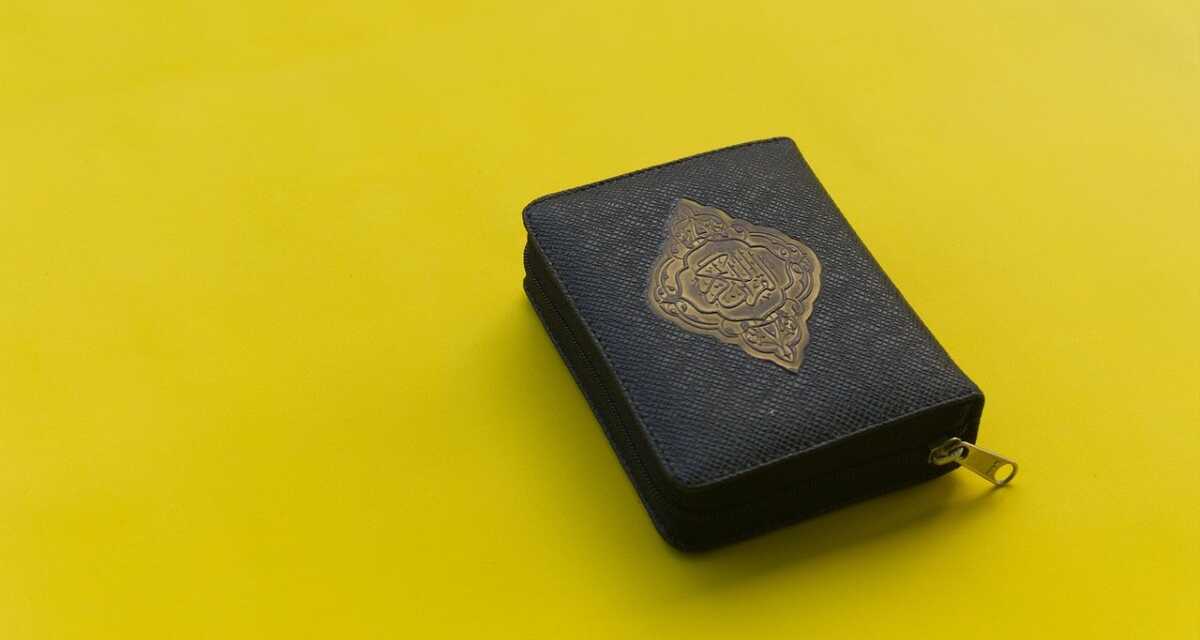
In my country, people hold Qur.aan over the bride’s head after Nikaah when she is walking towards bride groom’s car. I want to know the correct ruling regarding this custom.
Praise
be to Allah
Many people in some countries have the custom of holding the
Qur’an over the head of the bride, when she walks towards the groom’s car.
The motive for this custom is that they believe that this
action will ward off the evil eye and envy from the newlywed couple, and
will be a means of bringing barakah (blessing) and ensuring a long and happy
married life.
This action is an innovation (bid‘ah) and is akin to using
amulets and charms containing verses from the Qur’an. In fatwa no. 10543 we
stated that the most correct view concerning that is that it is haraam.
Shaykh Ibn Baz (may Allah have mercy on him) was asked about
some young people putting the Qur’an in their cars for fear of the evil
eye.
He replied: There is no basis for doing that; rather it is an
innovation that comes under the same heading as using amulets and charms.
Rather he should recite when he gets in his car:
‘A’oodhu bi
kalimaat Allaah il-tammaati min sharri ma khalaqa (I seek refuge in the
perfect words of Allaah from the evil of that which He has created),’
and ask his Lord for well-being. As for putting the Qur’an or some verses in
the car, in the form of an amulet or charm, there is no basis for that;
rather it is a kind of innovation and is akin to hanging up amulets, which
is not permissible.
End quote from Fataawa Noor ‘ala ad-Darb li Ibn Baaz,
ed. by ash-Shuway‘ir (1/359)
He was also asked: Is it permissible to put a Qur’an beside a
child or place it over his bed? May Allah reward you with good.
He replied: There is no basis for doing that, if the purpose
behind it is for it to protect him. There is no basis for this; moreover if
you put it with the child, he may tamper with it and mistreat it, because he
is a small child. Therefore it is not appropriate to leave it with him. If
he is going to mistreat it or play with it, it should not be left with him.
If the purpose behind that is so that it will protect him from the devils or
the jinn, there is no basis for any of that either; rather his family should
seek refuge for him in the perfect words of Allah from the evil of what He
has created. The Prophet (blessings and peace of Allah be upon him) used to
seek refuge with Allah for al-Hasan and al-Husayn at night when they went to
sleep, saying:
“U‘eedhukuma bi kalimaat Allah al-taammati min kulli
shaytaanin wa haammah wa min kulli ‘aynin laammah (I seek refuge for you
both in the perfect words of Allah, from every devil and every poisonous
reptile, and from every evil eye).’”.
So his father or mother should say for him when he goes to sleep:
“U‘eedhuka
bi kalimaat Allaah il-taammaati min sharri ma khalaq; U‘eedhuka bi
kalimaat Allah al-taammati min kulli shaytaanin wa haammah wa min kulli
‘aynin laammah (I seek refuge in the perfect words of Allah from the
evil of that which He has created; I seek refuge for you in the perfect
words of Allah, from every devil and every poisonous reptile, and from every
evil eye).” As for putting the Qur’an by his head or by his bed so that it
will protect him, or writing on pieces of paper that will be worn by the
child, this is not permissible. And it is Allah Whose help we seek.
End quote from Fataawa Noor ‘ala ad-Darb li Ibn Baaz,
ed. by ash-Shuway‘ir (1/359)
Shaykh Ibn ‘Uthaymeen was asked: What is the ruling on
placing the Qur’an in the car for the purpose of seeking barakah (blessing)
and protection against the evil eye, and also for fear of crashing?
He replied: The ruling on placing the Qur’an in the car so as
to ward off the evil eye or offer protection against danger is that it is an
innovation. The Sahaabah (may Allah be pleased with them) did not carry
copies of the Qur’an on their camels in order to ward off danger or the evil
eye. As it is an innovation, the Prophet (blessings and peace of Allah be
upon him and his family) said: “Every innovation is a going astray, and
every going astray will be in the fire.”
End quote from Fataawa Noor ‘ala ad-Darb li’l-‘Uthaymeen
(4/2)
And Allah knows best.


